Quick answer: The most effective GRE reading comprehension strategy is a disciplined, passage-first approach combined with active, selective annotation and a question-driven review. Read for the main idea, structure, and author’s purpose; mark only high-value information; answer questions by returning to specific lines or logical chunks in the passage; and practice timed sets to build speed and accuracy. With focused practice, this approach improves comprehension, reduces careless errors, and increases the number of questions you answer confidently under time pressure.
Why this matters
Reading comprehension (RC) makes up roughly half of the GRE Verbal section and contains some of the test’s most time-pressured, reasoning-based questions. Strong RC skills affect your overall verbal score because the questions test not only vocabulary but also logical reasoning, inference, and the ability to identify structure and tone. For many test takers, efficient RC is the difference between a good score and a great score because each question often depends on a precise reading of a single sentence or paragraph in a longer passage.
Common challenges GRE test takers face
- Overreading or underreading: Spending too much time on details or skimming past the passage’s core point.
- Poor annotation habits: Marking everything or nothing, which either wastes time or leaves you without anchors to return to.
- Confusing question types: Treating inference questions like fact questions or vice versa.
- Time pressure: Running out of time and guessing on later questions.
- Vocabulary traps: Letting unfamiliar words derail comprehension instead of using context clues.
- Answer misselection: Choosing options that are true but not supported by the passage.
Step-by-step strategy for GRE reading comprehension
Below is a practical, repeatable routine to use on every RC passage. Follow the steps in order. Practice will make the sequence fast and automatic.
-
Preview the passage fast (10–15 seconds). Read the first and last sentence, glance at topic sentences of the first two paragraphs, and note the passage length. This gives a hypothesis about the main idea and direction without wasting time.
-
Read actively for the main idea and structure (40–60 seconds for 250–450 words). Your goals are to identify:
- Topic — the subject being discussed.
- Main point — the author’s claim or conclusion about the topic.
- Purpose — why the author wrote this (to argue, explain, compare, criticize, propose).
- Structure — how the passage is organized (background, evidence, counterargument, rebuttal, conclusion).
Use short mental labels like claim, proof, counter, or example as you read.
-
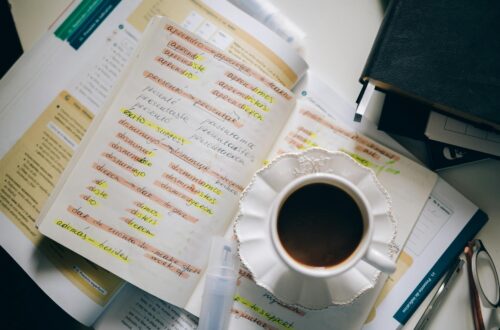
Annotate selectively (5–10 marks max). Only mark items that will help you answer questions later:
- Circle the thesis sentence.
- Underline signpost words such as however, therefore, on the other hand.
- Brackets around short lists of evidence or examples.
- Short margin notes: claim, weak, data, author stance, or symbols like +/– for positive/negative evaluations.
Avoid underlining every sentence. Annotations should save time when you return to the passage.
-
Read the first question and classify it (5–10 seconds). On the GRE, question types commonly are:
- Main idea / primary purpose
- Detail / factual
- Inference
- Function / structure
- Author’s tone / attitude
- Strengthen / weaken / evaluate (less common in single-passage RC)
Knowing the type tells you whether you must find an explicit sentence or make a logical inference.
-
Return to the relevant passage area. For detail questions, go to the exact sentence. For inference or main idea questions, consider the whole passage or the paragraph where the claim was made. Use your annotations to find the spot quickly.
-
Predict the answer before looking at choices (5–10 seconds). Form a short mental or written answer such as Author thinks X because of Y. This guards against attractive but incorrect choices.
-
Eliminate wrong choices methodically. Remove choices that are:
- Contradicted by the passage
- Factually true but not mentioned
- Too extreme or beyond the scope (overgeneralization)
- Irrelevant to the question
If two choices remain and both look plausible, choose the one that is most directly supported by the passage wording.
-
Manage time and move on. Aim for an average of 1.5 to 2.5 minutes per RC question depending on passage length. If a question is taking too long, make your best supported choice, mark it, and continue. Return later only if time remains.
How to handle different passage types
- Argumentative passages: Identify the claim, premises, and any flaws. Expect inference, strengthen/weaken, and structural questions.
- Expository or descriptive passages: Focus on scope and organization. Detail and main idea questions are common.
- Paired passages: Map the stance of each author and the points of agreement and disagreement quickly. Annotation should tag each author’s main claim.
Common mistakes and how to avoid them
- Mistake: Word-level reading instead of idea-level reading. Fix: Train yourself to compress sentences into short idea labels. Ask: What claim or support does this sentence provide?
- Mistake: Using outside knowledge or personal opinion. Fix: Constrain answers strictly to the passage. If an answer requires outside facts, it is incorrect.
- Mistake: Over-annotating. Fix: Use at most five clear marks. Over-annotation increases reading time and confusion.
- Mistake: Misclassifying question type. Fix: Pause briefly to determine whether the question asks for explicit detail or inference before answering.
- Mistake: Falling for emotionally attractive choices. Fix: Always compare the choice to the passage text. Favor the option that is supported, even if it is bland.
Practice and implementation
Practice is essential. Use a structured plan that moves from accuracy to speed. Below is a sample six-week practice schedule tailored for busy students and retakers.
Six-week practice plan (3 sessions per week)
| Week | Focus | Session tasks |
|---|---|---|
| 1 | Technique and annotation | 10 untimed passages. Practice the full step-by-step method. Record time per question but do not rush. |
| 2 | Question types | Day 1: inference-focused set. Day 2: detail questions. Day 3: main idea and structure. |
| 3 | Accuracy under light time | Timed sets: 8–10 passages, target 2–2.5 minutes per question. Review every mistake in detail. |
| 4 | Paired passages and complex arguments | Practice paired passages and long argumentative passages. Focus on mapping stances and counterarguments. |
| 5 | Mixed timed practice | Full verbal sections under test-like timing. Emphasize endurance and pacing. |
| 6 | Targeted review and simulation | Identify weakest question types and drill them. Complete two full mock Verbal sections. |
Practical drills to build skills
- Speed summarization drill: Read a 200–300 word paragraph, then write a one-sentence summary in 20–30 seconds. Check accuracy.
- Annotation restraint drill: Limit yourself to three marks per passage. Measure whether this improves time while keeping accuracy high.
- Prediction drill: Read the question stem before the choices and write a one-line predicted answer. Compare with the correct answer to reduce distractor errors.
- Detail spot drill: For fact questions, practice jumping directly to the sentence you underlined for verification rather than re-reading the whole passage.
Sample passage and worked example
Use the following short passage to see the strategy in action. Read it using the recommended steps.
Passage: Urban planners in several cities have turned to community gardens as a tool to reclaim underused lots. Proponents argue that gardens improve food access, increase green space, and foster social ties. Critics note that community gardens often rely on volunteer labor and short-term funding, which can limit long-term viability. A middle-ground approach treats gardens as part of multifaceted neighborhood initiatives that include maintenance endowments and partnerships with local nonprofits. Evidence from recent case studies suggests that gardens succeed when they are embedded in broader programs that address both physical upkeep and community governance.
Example question: According to the passage, which claim about community gardens is most supported?
- A. Community gardens alone are sufficient to revitalize neighborhoods.
- B. Community gardens always fail because they lack funding.
- C. Community gardens are most successful when supported by broader neighborhood programs.
- D. Community gardens are primarily valuable for increasing food production.
Worked approach:
- Preview and Read: Identify main point. The passage argues that community gardens can help but often need additional support.
- Annotate: Mark thesis (middle-ground approach) and sentence about evidence from case studies showing success when embedded in broader programs.
- Classify question: This is a main-claim/support question seeking what is most supported.
- Predict answer: Gardens are most successful when supported by broader programs.
- Eliminate: A is too strong and not supported. B is absolute and contradicted. D narrows value incorrectly. C matches the passage wording.
- Choose C.
Frequently asked questions
How long should I spend reading each RC passage?
Aim for roughly 40–60 seconds on a typical 250–450 word passage during practice, then 5–10 seconds per question to review the passage area and 30–90 seconds to answer depending on difficulty. Your actual pacing should be tuned through timed practice so you can complete the section without rushing at the end.
Should I read passages word-for-word or skim?
Read carefully enough to extract the main idea, structure, and key supporting points. That often means compressing sentences into idea-level notes rather than memorizing every word. Avoid skimming past the thesis or the author’s stance.
Is it better to read the passage first or the questions first?
For most students, a passage-first approach works best because many GRE questions require understanding of tone and structure that come from the whole passage. If you are especially weak in detail questions, you can preview question stems to know what to look for, but do not rely on this as a primary method.
How do I handle unfamiliar vocabulary?
Use context to infer meaning rather than skipping the sentence. Often vocabulary is not necessary to answer the question if you understand the sentence’s function in the passage. If a word is crucial, prefer the answer option that matches the passage’s overall meaning rather than a synonym you know from outside the passage.
How many passages should I practice per week?
Quality over quantity. Start with 10–15 targeted passages per week, focusing on careful review of every mistake. As you approach test day, increase to full timed sections and include at least two or three mock Verbal sections per week.
Final thoughts
Effective GRE reading comprehension is a skill built from consistent, focused practice. Use a passage-first method, make concise annotations, classify questions, predict answers, and eliminate choices based on passage support. Track your errors to identify recurring weaknesses such as inference mistakes or misreading tone, and tailor practice to those areas. Over time, these habits will reduce careless errors and improve both speed and accuracy. Prioritize deliberate practice rather than sheer volume and use timed simulations to ensure your skills transfer to test conditions.